Medication Management vs Therapy: What’s the Difference?
Understanding Two Common Types of Mental Health Care
Many people use the words therapy and medication management as if they mean the same thing, but they are actually different parts of mental health care. Both can be helpful, and many people benefit from using them together.
🧠 What is Therapy?
Therapy is a type of mental health treatment where you talk with a trained provider about your thoughts, feelings, and experiences.
It can help you:
💬 Understand your emotions
🛠️ Learn coping skills
🌱 Work through stress, trauma, or life challenges
🔄 Change unhelpful thought patterns
Therapy is usually done through regular sessions over time.
💊 What is Medication Management?
Medication management focuses on using psychiatric medications to help treat symptoms of mental health conditions such as anxiety, depression, ADHD, or bipolar disorder.
This includes:
📋 Evaluating symptoms
💊 Prescribing medication when appropriate
⚖️ Adjusting doses over time
👀 Monitoring how you respond and feel
Medication management comes for licensed providers, such as a Psychiatric Nurse Practitioner or Psychiatrist (MD).
⚖️ How Are They Different?
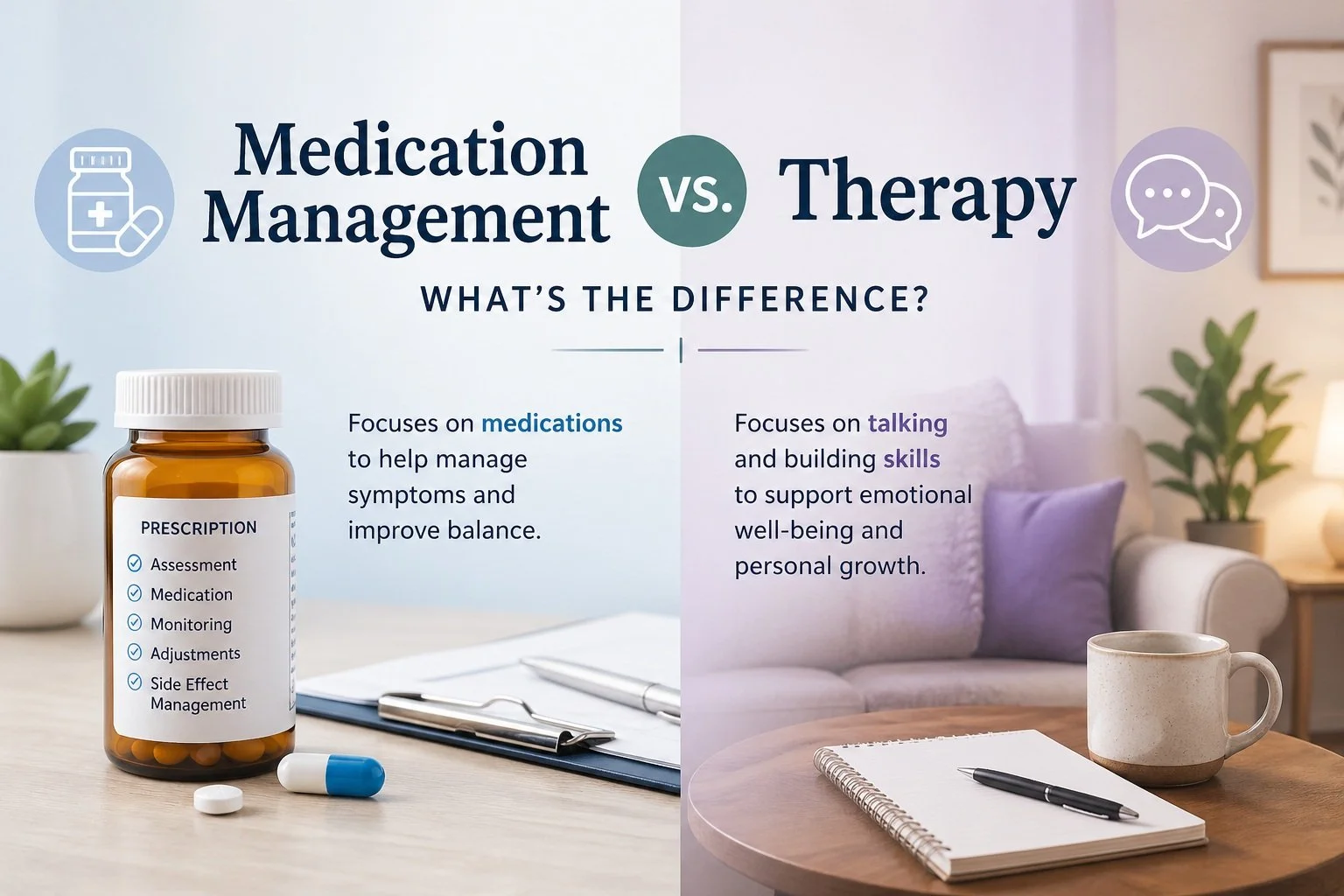
The main difference is the approach:
💬 Therapy focuses on talking, understanding, and building skills
💊 Medication management focuses on treating symptoms with medication
They work in different ways, but both aim to improve mental health and daily functioning.
🤝 Do You Need One or Both?
It depends on your needs. Some people benefit from therapy alone, some from medication alone, and many do best with a combination of both.
A psychiatric provider can help you decide what approach is right for you.
🌟 Final Thoughts
Therapy and medication management are not competing options—they are often complementary tools that support mental health in different ways.
If you’re unsure where to start, a psychiatric evaluation can help guide the best treatment plan for you.