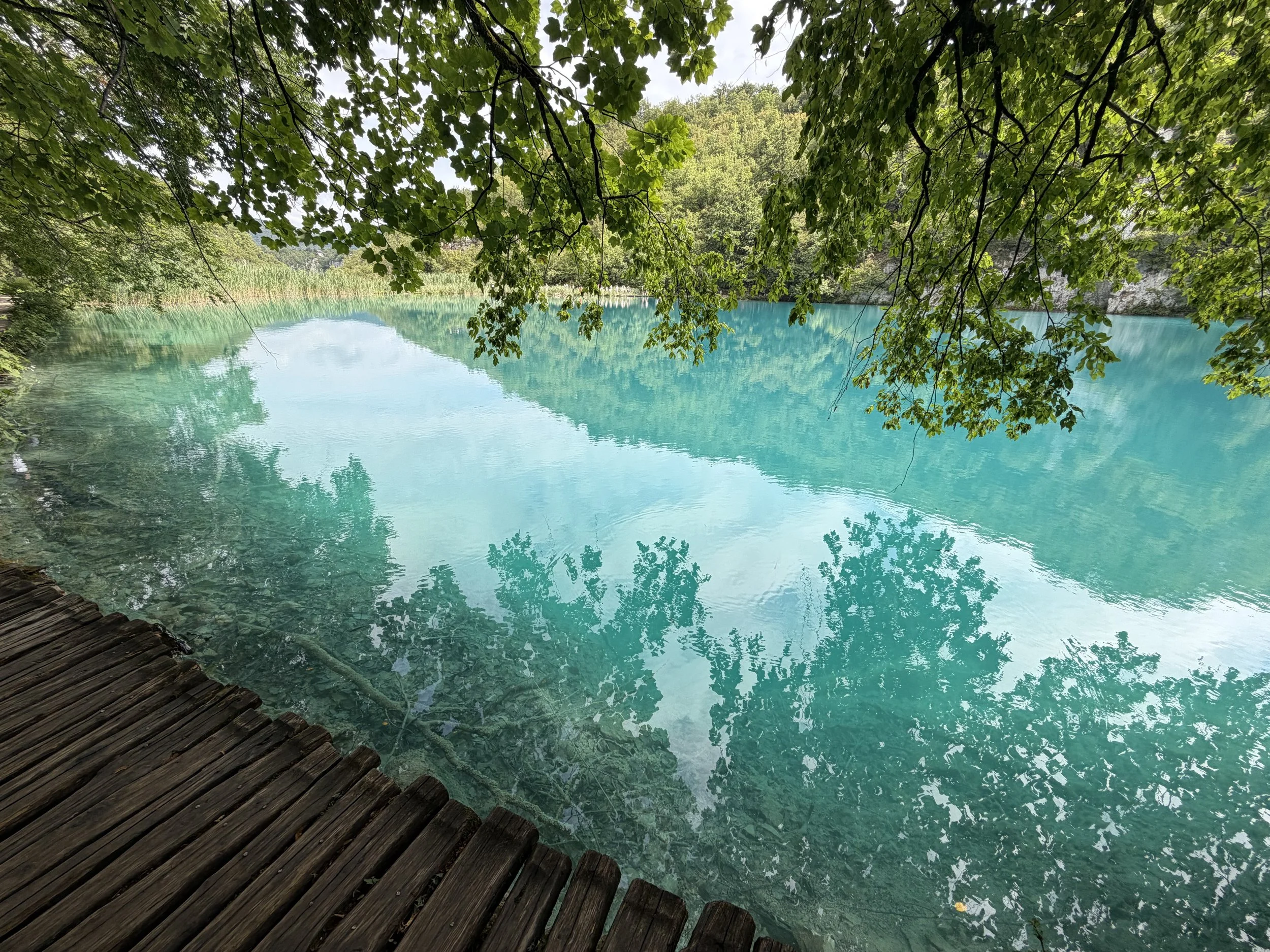
Sometimes nature gives us a reason to pause.
The photograph above was taken during a recent trip to Croatia. The striking blue color of the water is not the result of a filter. The lake’s mineral-rich limestone environment affects how light interacts with the water, helping create its brilliant turquoise appearance. Seeing something so naturally vivid can inspire a sense of wonder—a feeling that may be especially valuable when life feels stressful, repetitive, or emotionally heavy.
Spending time in nature does not replace therapy, medication, or professional mental health care. However, it can be a meaningful part of supporting emotional well-being.
Nature Can Awaken a Sense of Wonder
Wonder is the feeling we experience when we encounter something beautiful, surprising, or larger than ourselves. It might happen while looking across a bright blue lake, watching sunlight move through trees, seeing a dramatic sunset, or noticing a flower growing in an unexpected place.
These moments can gently shift our attention away from worries and toward what is happening around us. Even briefly, nature can remind us that the world still contains beauty, change, and possibility.
You do not need to travel to Croatia or visit a famous natural landmark to experience this feeling. Wonder can also be found in clouds moving across the sky, birds gathering in a tree, rain against a window, or the changing colors of evening light.
Nature Gives the Mind a Break
Daily life can involve constant stimulation from screens, responsibilities, traffic, noise, work, and difficult thoughts. Natural settings often provide a quieter space where the mind does not have to process quite as much information.
Sitting under a tree, walking through a park, gardening, or simply stepping outside for a few minutes can create a moment of mental space. This pause may help the body feel calmer and make stress feel more manageable.
Being Outdoors Can Support Your Mood
Fresh air, natural light, movement, and a change of scenery may help improve energy and support a more positive mood. Nature can be especially helpful when you feel emotionally drained, restless, disconnected, or stuck in the same routine.
The activity does not need to be strenuous. A slow walk, sitting on a bench, drinking coffee outside, or spending a few minutes near plants can still be worthwhile.
Nature Encourages Mindfulness
Nature naturally brings our attention to the present moment. You might notice:
The movement of leaves in the wind
The sound of birds or water
The temperature of the air
The colors and reflections around you
The feeling of the ground beneath your feet
Paying attention to these details can interrupt racing thoughts and help you reconnect with your surroundings.
One simple exercise is to pause and ask yourself:
What can I see, hear, feel, and smell right now?
There is no need to force yourself to feel calm. The goal is simply to notice what is present.
Nature Can Help Us Gain Perspective
Mental health challenges can sometimes make our problems feel as though they are taking up the entire world. Being outdoors may create enough distance to see things a little differently.
Looking at an old tree, a wide sky, an ocean, or a mountain can remind us that life is larger than the difficult moment we are currently experiencing. This does not make our problems disappear, but it may help us hold them with a little more perspective.
Nature also demonstrates that change is a normal part of life. Seasons shift, water moves, plants grow, and landscapes change over time. These patterns can serve as quiet reminders that difficult emotions and circumstances can change as well.
Nature Can Support Connection
Depression, anxiety, and other mental health concerns can sometimes lead to isolation. Outdoor activities can provide opportunities to reconnect with supportive people.
You might walk with a friend, visit a park with family, garden with a neighbor, or attend an outdoor community event. At other times, being alone in nature may help you reconnect with yourself.
Both forms of connection can be valuable.
Small Ways to Bring More Nature Into Your Life
You do not need to plan a major trip or spend hours outdoors. Consider starting with something small and realistic:
Sit outside for five minutes.
Take a short walk around your neighborhood.
Eat a meal or drink your morning coffee outdoors.
Watch the sunrise or sunset.
Visit a local park, garden, lake, or walking trail.
Open a window and listen to outdoor sounds.
Keep a plant in a place where you will notice it.
Look closely at the sky, trees, flowers, or wildlife around you.
Take a photograph of something in nature that surprises you.
When depression, anxiety, fatigue, or low motivation make it difficult to get outside, a very small step still counts. Standing at your doorway, sitting near an open window, or noticing the sky for one minute can be a beginning.
Make Room for Wonder
Nature does not have to solve anything to be helpful.
Sometimes its value is simply that it reminds us to stop, look, and experience something beyond our usual thoughts. A lake can appear almost impossibly blue. Light can transform an ordinary landscape. A brief moment outdoors can help us feel calmer, more present, or more connected.
The next time you encounter something beautiful in nature, allow yourself to pause. Notice the colors, sounds, textures, and details. Give yourself permission to feel curious.
That moment of wonder may be doing more for your well-being than you realize.
Spending time in nature can complement mental health treatment, but it is not a substitute for professional care. Speak with a qualified mental health professional when anxiety, depression, trauma symptoms, sleep problems, or other concerns are interfering with daily life.